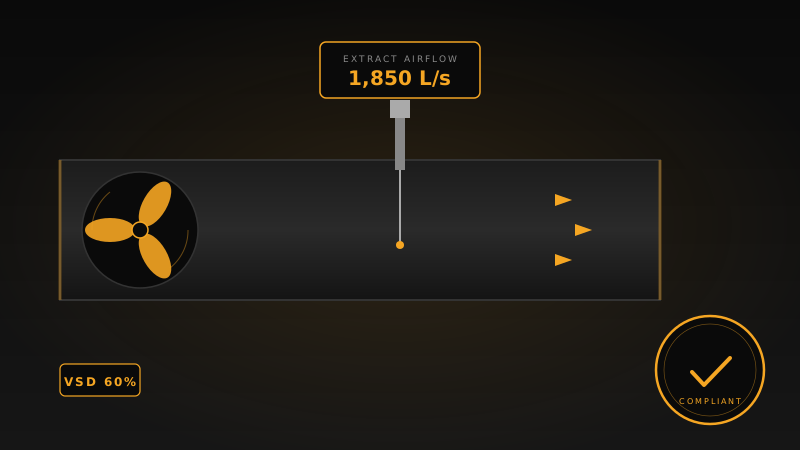
Whenever we discuss a variable speed drive retrofit on a commercial kitchen exhaust fan, operators ask the right question: "If the fan slows down, will the system still perform as intended?"
A VSD changes fan operation, so it must be selected, programmed and commissioned for the actual motor, fan, controls and kitchen. Installing a drive does not by itself prove or disprove compliance with AS 1668.2 or the building's approved mechanical design.
What Has to Be Considered
The applicable airflow and control requirements depend on the approved design, the relevant standard edition and the cooking process. A site without reliable design information may require further mechanical assessment before any compliance conclusion can be made.
Four Checks That Matter
1. Required operating airflow
The system needs sufficient extract airflow and capture when cooking is taking place. Airflow should be measured under defined operating conditions and compared with available design or assessment criteria. A 100% command on the VSD is not proof that the required airflow is being delivered.
2. Minimum commissioned speed
The minimum permitted speed must be established for the specific kitchen. It should not be copied from another venue or selected only to reduce noise or energy use. Capture observations and airflow measurements help establish an appropriate lower limit for each operating mode.
3. Make-up air and pressure balance
Changing exhaust airflow can affect replacement air, room pressure, doors, odour movement and canopy capture. Existing make-up air fans, dampers and control sequences must be considered as part of the system rather than treating the exhaust fan in isolation.
4. Controls and interlocks
Fire-trip signals, starters, enable circuits, ESP or ozone interfaces and other relevant controls must continue to operate as intended. The exact interlock requirements depend on the installed equipment and approved design.
Useful Commissioning Records
The agreed commissioning scope may record:
- VSD model, motor data and programmed speed limits.
- Operating modes and the conditions under which each mode is used.
- Measured airflow and capture observations at nominated settings.
- Relevant make-up air operation and control behaviour.
- Tested interlocks within the electrical scope.
- Known limitations, unavailable design information and recommended further work.
The records should describe what was actually tested. They should not claim whole-building compliance where the inspection or commissioning scope was limited.
What the VSD Can Tell You
Many drives display output frequency, motor current, faults and runtime. These values are useful for maintenance and fault diagnosis, but they do not directly measure airflow or prove canopy capture. Optional monitoring can help identify operating trends where compatible equipment and an appropriate monitoring system are available.
If the exhaust fan is stopped, noisy, vibrating or repeatedly faulting, our commercial exhaust fan repair service can diagnose the fan, motor, electrical supply and controls before a VSD change is recommended.
The Short Version
A VSD can be a practical upgrade for an existing kitchen exhaust system when:
- The fan and motor are suitable for variable-speed operation.
- Operating limits are based on site measurements and available design information.
- Make-up air, pressure balance and relevant interlocks are considered.
- The tested scope, settings and limitations are documented.
View our VFD, controls and interlocks service, call 0423 063 061, or request an assessment through the contact page.
This article provides general information only and is not engineering or certification advice. Requirements must be confirmed for the specific building, approval, system and scope.